Bare-Root Planting Tips
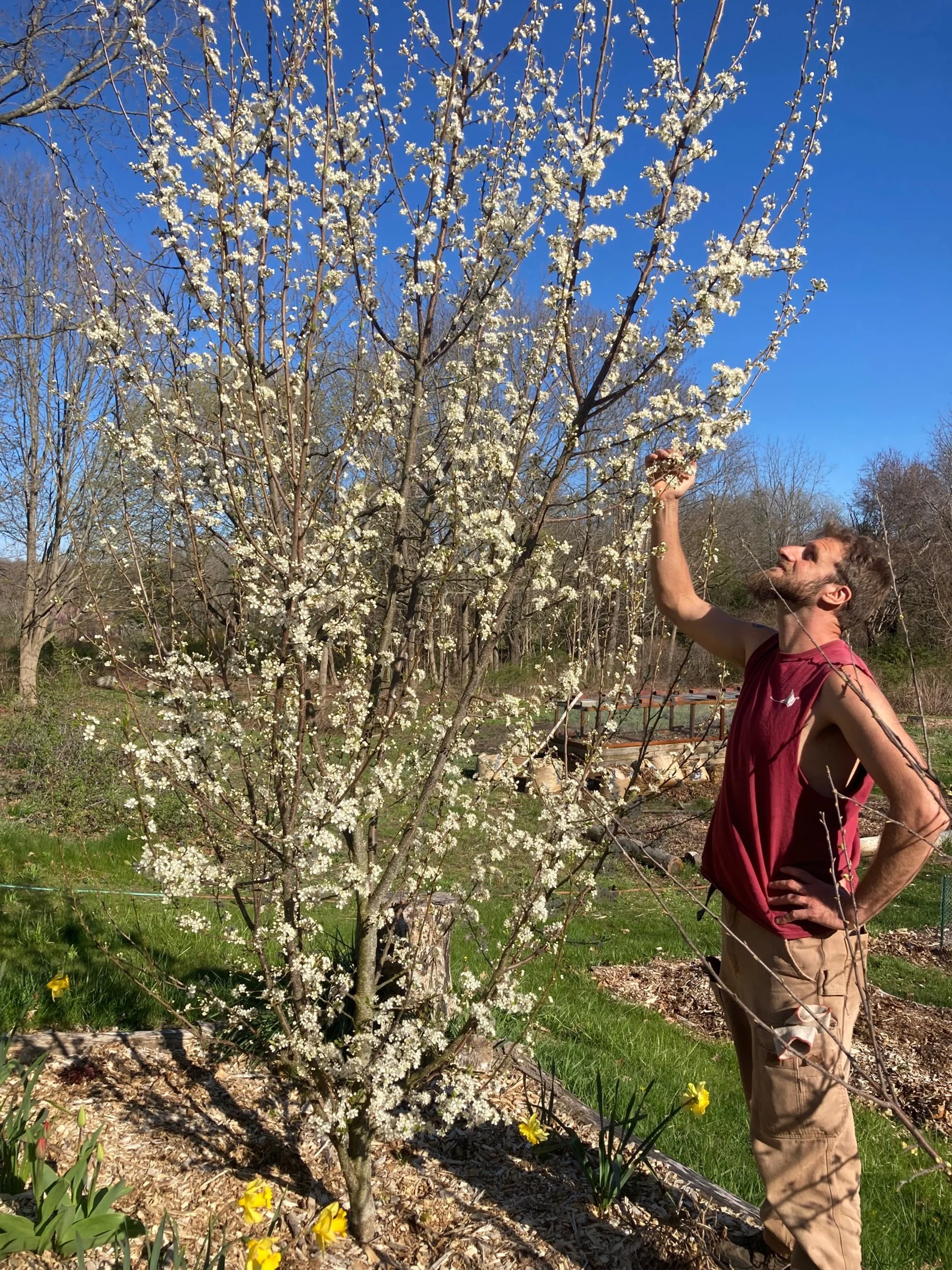
Caring for ANY plant is such a rewarding experience. That feeling increases exponentially when we talk about establishing trees that will outlive ourselves by hundreds of years, dropping nuts and fruits the entire time. I like to call these long lived beings “Legacy Trees” because to Jenna and I that is exactly what we are doing, leaving behind a legacy of food, beauty, habitat, clean air and water.
But first, we must nurture them in their infancy if we want to see them grow up.
When you buy trees from us, they will be shipped in the spring or fall as dormant bare-root trees. I like to immediately soak the roots in a bucket of water or compost tea. Not too long, about 20 minutes or so, just enough to re hydrate them after their journey via mail.
If possible, plant the same day the trees/plants arrive. If this is NOT possible, you can ‘heel them in’, which just means burying the roots in moist medium. This could be soil, wood chips, aged sawdust, leaves….really just anything to keep the roots moist for a few days to a week until you can plant them. Don’t wait too long or the roots will start growing into the medium. Also avoid things that could heat up rapidly such as active compost or fresh sawdust.
Next steps after planting are watering and mulching. Simpy give them a deep watering and then layer a thick carbon source to suppress weeds, retain moisture and build fertility. My favorites are wood chips and leaves, but straw and sawdust work well too. If your area is consistently rainy, this might be all the watering you need. If you live in a dry area, then watering the trees throughout this first year will be helpful to get them established. Once established, trees can get by with little irrigation in all but the driest areas.
Protection from critters will be very important depending on your area. In the winter, voles, rabbits and deer can strip bark from young trees. We use a combination of trunk wraps, cages, mowing, cats and scent repellents to scare, confuse and block animals from our trees. Again, once established this becomes less of an issue. First and second year trees are most susceptible. White trunk guards can also protect against southwest injury. This is when the sun warms part of the trunk in winter, then temperatures drop and the bark cracks.
Thanks for ordering and happy planting!